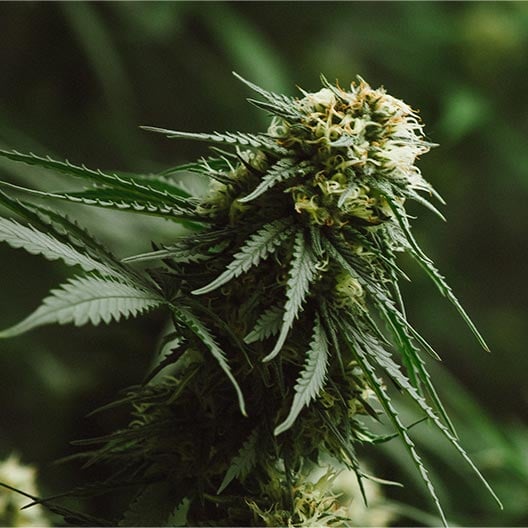
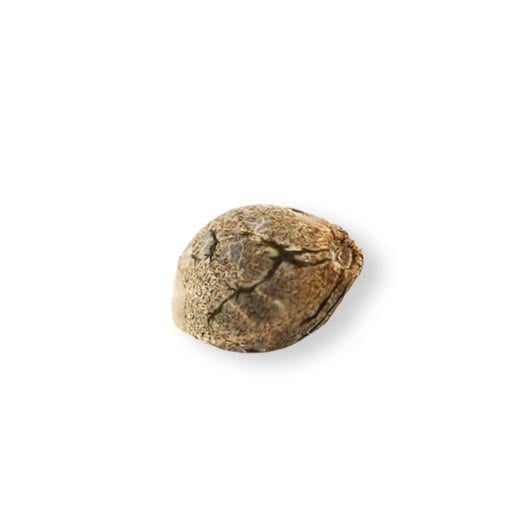
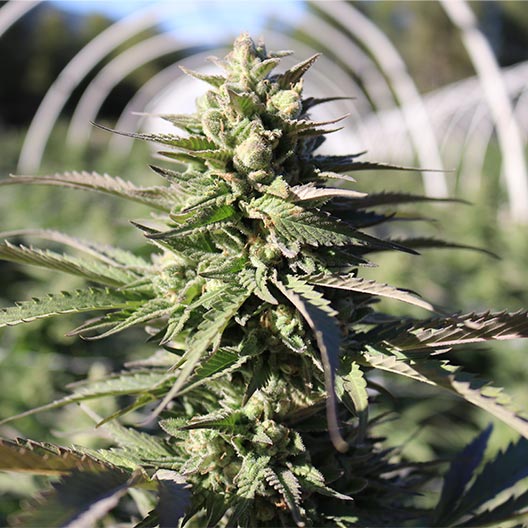
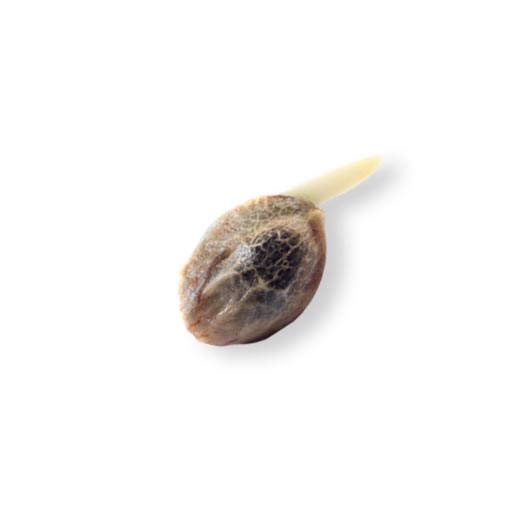
Tetrahydrocannabivarin (THCV) isn’t nearly as famous as THC, but has quietly earned fanfare, especially in recent years. Growers who have never heard the term before may wonder: what is THCV in weed? And what does it do?
In short, THCV is a minor cannabinoid. While it’s often present in small concentrations of just 0.1–0.2% (ElSohly et al., 2024), certain African landrace sativas, such as Durban Poison, contain much higher levels. Although there’s no guarantee as to how a particular flower, gummy, or vape will affect you, some research supports the idea that significant levels of THCV may be associated with increased focus, motivation, and potential appetite suppression (Mendoza, 2025). Cannabis fans have noticed this pattern too, casually dubbing strains with significant levels of THCV “diet weed.”
This guide walks growers through what we know so far about THCV’s effects and how these differ from THC’s. We’ll also explain which cultivars are associated with higher THCV levels, making it simpler for interested growers to zero in on the right group of strains.
What is THCV?
THCV belongs to a group called varin cannabinoids, a subclass of phytocannabinoids. While cannabinoids like THC and CBD have a five-carbon (pentyl) side chain, varin cannabinoids like THCV have a three-carbon (propyl) side chain (Haghdoost et al., 2024).
You may be wondering: how does this relate to THCV’s effects? In short, the length of a cannabinoid’s side chain can influence how it interacts with the body’s endocannabinoid system. For example, THC’s longer side chain activates CB1 receptors—the sites associated with weed’s intoxicating effects. On the flip side, some research notes that THCV’s shorter side chain may block or reduce CB1 activation, suppressing the qualities THC is known for, such as euphoria and increased hunger. (Mendoza, 2025)
How Does Cannabis Produce THCV and THC?
Weed plants make these two separate cannabinoids in different ways. THCV production does not begin with cannabigerolic acid (CBGA), the precursor associated with THC. Instead, the process begins with a compound called cannabigerovarinic acid (CBGVA). After enzymes convert CBGVA into tetrahydrocannabivarinic acid (THCVA), heating removes a carboxyl group, converting THCVA into THCV. This process is called decarboxylation, and also occurs when THCA becomes THC.
A Note on THCV’s Boiling Point
A recent study suggests the boiling points for THC and THCV are higher than once believed. While THC’s boiling point is frequently listed as 157°C, researchers suggest this figure may refer to the cannabinoid’s boiling point under a laboratory vacuum—not normal atmospheric conditions. The same theory may apply to THCV. A 2026 study estimated both cannabinoids’ boiling points under normal atmospheric pressure at 245°C (473°F) for THC and 378°C (712.4°F) for THCV (Turovsky et al., 2026). While a cannabis vaporizer isn’t designed to reach these temperatures to begin with, it’s also worth noting that both cannabinoids can evaporate at temperatures lower than their respective boiling points. To give an everyday example, heating water on the stove will produce steam long before the liquid boils. The takeaway here is that boiling-point charts alone can’t tell you how much THCV a vape will deliver.
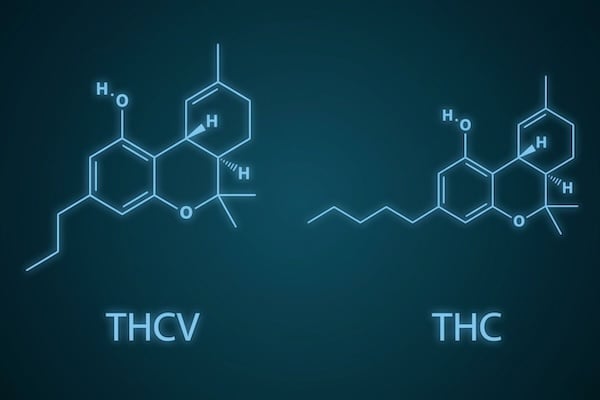
THCV vs THC: Key Differences
The following table breaks down some of the most relevant differences between THCV and THC.
| Feature | THCV | THC |
| Chemical structure | Three-carbon side chain | Five-carbon side chain |
| Biosynthetic precursor | CBGVA, then THCVA | CBGA, then THCA |
| CB1 action | Can block or activate the receptor, depending on dose and experimental conditions | Partial agonist: activates the receptor |
| Intoxication | Limited human evidence; effects depend on dose and formulation | Established intoxicating effects |
| Appetite | Appetite-reducing findings mainly come from animal research | Commonly increases appetite |
| Boiling point | 378°C (712.4°F) | 245°C (473°F) |
| Typical flower content | Usually a minor component; genetics and testing matter | Often a major component in THC-dominant flower |
Note: Chemical and pharmacological distinctions are summarized from Mendoza (2025); boiling-point estimates are from Turovsky et al. (2026).
Dose May Influence THCV’s Effects
THCV’s effects may vary depending on the dose. As mentioned earlier, THCV can block some CB1 activity at lower doses (Mendoza, 2025). In a human study, higher doses of delta-8-THCV produced mild THC-like effects without measurable impairment (Peters et al., 2023).
THCV May Modify Some THC Effects
In a small crossover trial, 10 individuals received 10 mg of THCV daily for five days before intravenous THC. Nine reported weaker THC effects after THCV, and some measures suggested protection against delayed-recall impairment. However, the rates of incorrectly recalling items that weren’t presented to the participants did increase, suggesting that THCV didn’t simply “cancel out” THC. (Englund et al., 2016).
THCV vs THCA vs THCP
THCA is THC’s acidic precursor, while THCVA is THCV’s acidic precursor. In this context, “precursor” simply means the compounds present before heat converts them into THC and THCV, respectively.
THCP, by contrast, is a separate cannabinoid entirely, rather than a precursor to THC or THCV. It has a seven-carbon side chain and showed stronger CB1 binding than THC, along with THC-like activity in animal research (Citti et al., 2019).
THCV Effects: What Does THCV Do?
THCV’s potential effects on energy, appetite, and blood sugar regulation are currently being studied. Early research offers some support for these THCV benefits, although results will vary between different effects and amounts.
Energy and Focus
Some research supports THCV’s reputation as an energizing cannabinoid. In an industry-sponsored, double-blind study, participants taking a THCV-rich gummy reported greater energy and motivation than those taking a placebo. The gummy also contained THC, so the findings apply to that combination rather than isolated THCV. Improved concentration has not yet been established (People Science, n.d.).
Appetite and Weight Loss
THCV may influence appetite differently from THC, which commonly triggers the munchies. In a mouse study, purified THCV reduced food intake and produced short-term weight loss, supporting its potential appetite-suppressing effects (Riedel et al., 2009). However, a small human trial found no significant effect on appetite or weight loss. (Jadoon et al., 2016). THCV weight loss or weight management remains under investigation
Blood Sugar and Metabolic Research
THCV has also shown some promise in blood sugar research. A 13-week pilot trial tested whether CBD, THCV, or a combination of the two changed HDL cholesterol levels in people with type 2 diabetes. While these treatments did not significantly affect HDL cholesterol levels, participants taking 5 mg of THCV twice daily had significantly lower fasting blood glucose than those taking a placebo (Jadoon et al., 2016). These findings support further research into THCV’s metabolic effects. However, it’s important to mention that THCV products should not be considered a treatment for diabetes or any other condition.

Image credit: Onur Coşkun
THCV Strains
Our seed library includes a number of THCV-associated cultivars. African sativas, in particular, are closely associated with above-average levels of this cannabinoid, with Durban Poison being one of the best-known examples. We’ve highlighted some other notable varieties below, and encourage those looking for even more options to browse our 100% sativa seeds menu. While high sativa content doesn’t necessarily mean higher THCV levels, this particular category can be a good place to start.
Durban Poison
This South African landrace exudes old-school cool. Since debuting in the 1970s, it’s enjoyed over 50 years of fanfare. Its sweet, spicy smoke and sharp, focused effects are just some of the reasons growers return to this strain again and again. A low-maintenance, beginner strain, it produces generous yields and has a prompt flowering time of just 55-65 days.
-
 Durban Poison Seeds$34.03Add to cartAdd to cart
 Select options
These Durban Poison seeds produce a cultivar that’s 100% Sativa from South Africa. Durban Poison has a 20% THC content and moderate CBD content. Providing an energized cerebral buzz, this bud tastes and smells like sweet, earthy pine.
Select options


Jack the Ripper
Estimated THCV levels: Approximately 5% (Benton & Ritchey, 2025).
The offspring of Jack’s Cleaner and Space Dude, Jack the Ripper is a hybrid commonly described as energetic and creative. Its recognizable scent is dominated by lemon and pine notes. This strain also has a flowering time of 55-65 days. This strain’s THCV levels
-
 Jack the Ripper Seeds$53.51Add to cartAdd to cart
Select options
While Jack the Ripper’s cerebral effects are potently rousing and motivating, this mind-focusing sativa hybrid is unlikely to overwhelm users with the kind of heart-racing jitters that too much caffeine can impart.
Select options


Red Congolese
Estimated THCV levels: Up to 1% (Olmos, 2024).
Red Congolese is a pure sativa hybrid. Believed to be the offspring of an African landrace sativa, Acapulco Gold, and Afghani, it also contains notable amounts of THC (18%) and CBD (10%). Uplifting and cerebral, it’s praised for its happy-making effects and fruity, spicy flavor. Our autoflowering variety is an especially good choice for beginners or any cultivator looking for a lower-maintenance grow.
-
Fire OG Seeds$34.77Add to cartAdd to cart
Select options
Fire OG is Indica-dominant with a 22% THC content, boasting potent, happy, relaxed, and euphoric effects. The flavor and aroma are similar to earth, citrus, with hints of pine.
Select options


Willie Nelson
Estimated THCV levels: Up to 1% THCV (Olmos, 2024).
Named after the legendary musician and cannabis advocate, Willie Nelson debuted in the early 2000s, gaining wider recognition after winning a High Times Cannabis Cup in 2005. This 60:40 sativa-to-indica hybrid has notable CBD levels of up to 10% and potent THC levels of 22%. Uplifting, happy, and euphoric, it’s an old-school hit that’s ideal for those looking to boost their mood.
-
 Willie Nelson Seeds$49.99Add to cartAdd to cart
Select options
Willie Nelson marijuana seeds can be easily cultivated into plants that boast a sativa-to-indica ratio of 60:40 with a THC content that averages around 22%. In addition, this strain comes with the added benefit of a relatively high CBD level of 1%.
Select options


Can You Increase THCV When Growing?
Genetics largely determine the ceiling for how much THCVA (THCV’s precursor) any one plant can produce. That said, growing conditions and post-harvest care play an important role too, as a thoughtful approach will increase your odds of reaching that ceiling. They just can’t turn a low-varin plant into a high-varin one.
Genetics and Plant Variation
“High-THCV” is a claim that needs supporting cannabinoid analysis, not just a familiar strain name. Individual plants can differ, which is why discussions of varin-rich genetics often involve phenotype variation.
Does An Earlier Harvest Preserve More THCV?
Some growers suggest that harvesting sooner may result in higher amounts of THCV. While these observations can be valuable, keep in mind that this outcome is more of a possibility than a proven outcome.
Curing and Storage: What Does the Evidence Show?
Research shows that temperature, light exposure, and storage duration can alter cannabis cannabinoid profiles. While THC and CBD have been studied more extensively, some research shows that temperature, light exposure, and storage duration can alter cannabis cannabinoid profiles (Zamengo et al., 2019).
Is THCV Legal? (Gummies, Vapes, and Flower)
In the US, hemp-derived THCV products are sold under the 2018 Farm Bill’s framework of no more than 0.3% delta-9 THC by dry weight. State rules vary, however, and meeting that threshold does not automatically make every product legal. As of October 20, 2026, the newer federal restrictions affecting finished hemp-derived cannabinoid products have not taken effect; those changes are scheduled for December 11, 2026 (Congressional Research Service, 2026).
Some commercial THCV is extracted from cannabis, while some is synthesized from CBDV—a related cannabinoid, not CBD (Arvida Labs, 2025). THCV gummies and vapes may blend it with delta-9 THC, delta-8 THC, or other cannabinoids, so “THCV” does not mean THC-free. Check a batch-matched certificate of analysis (COA) for cannabinoid amounts and contaminant testing.
For growers, buying any cannabis seeds, including THCV seeds, and legally growing them are separate questions. Cannabis seeds are sold under hemp rules or marketed as collectible souvenirs, as Pacific Seed Bank does. Neither automatically permits cultivation. Consult PSB’s existing US seed-legality content and check your state and local growing requirements before planting.
Image credit: Kindel Media
Some Closing Thoughts
If higher-THCV strains sound like something you’d like to explore, we recommend taking a look at our seed library. Our sativa category can be an especially helpful group to begin with, as African sativa landraces tend to have higher levels of THCV than other choices.
FAQs
Does THCV get you high like THC?
THC activates CB1 receptors, which help produce its intoxicating effects. THCV can actually block activity at those receptors under certain conditions. One trial did find that high oral doses of delta-8-THCV produced euphoric feelings in some participants, but without measurable impairment (Peters et al., 2023).
What is THCV in gummies?
THCV is a cannabinoid added to the gummy’s formula, either on its own or alongside other cannabinoids. A product marketed as a “THCV gummy” may also contain delta-9 THC or delta-8 THC, which can substantially affect how it feels. Check the amount of each cannabinoid per gummy and look for a batch-matched certificate of analysis, or COA. The product name alone does not tell you its contents or whether it is intoxicating.
Does THCV suppress appetite?
Possibly, but it is not an established appetite suppressant for people. Some animal studies found reduced food intake, while a small human diabetes trial did not find significant improvements in appetite or body weight compared with placebo (Riedel et al., 2009; Jadoon et al., 2016). “Diet weed” is a marketing nickname—not a guarantee that THCV will reduce hunger or cause weight loss.
Which strain has the most THCV?
Because cultivars will vary from one breeder to the next, there is no definitive “highest-THCV” strain. However, Durban Poison is commonly associated with higher THCV levels.
Is THCV the same as THCA?
No. THCA is the acidic precursor that converts into THC through decarboxylation. THCV is a completely separate cannabinoid.
References
Arvida Labs. (2025, August 19). How is THCv made: Production methods for B2B partners. https://www.arvidalabs.com/post/how-is-thcv-made
AskGrowers. (n.d.). Power Plant. https://askgrowers.com/strains/power-plant-strain-review
Benton, E., & Ritchey, C. (2025, March 26). Everything you need to know about THCV, the so-called “diet weed.” Men’s Health. https://www.menshealth.com/health/a39865342/what-is-thcv/
Citti, C., Linciano, P., Russo, F., Luongo, L., Iannotta, M., Maione, S., Laganà, A., Capriotti, A. L., Forni, F., Vandelli, M. A., Gigli, G., & Cannazza, G. (2019). A novel phytocannabinoid isolated from Cannabis sativa L. with an in vivo cannabimimetic activity higher than Δ⁹-tetrahydrocannabinol: Δ⁹-tetrahydrocannabiphorol. Scientific Reports, 9, Article 20335. https://doi.org/10.1038/s41598-019-56785-1
Congressional Research Service. (2026, September 28). Changes to the statutory definition of hemp and implications for agricultural policy (IF13136). https://www.congress.gov/crs-product/IF13136
ElSohly, M. A., Majumdar, C. G., Chandra, S., & Radwan, M. M. (2024). A 10-year trend in cannabis potency (2013–2022) in different geographical regions of the United States of America. Frontiers in Public Health, 12, Article 1442522. https://doi.org/10.3389/fpubh.2024.1442522
Englund, A., Atakan, Z., Kralj, A., Tunstall, N., Murray, R., & Morrison, P. (2016). The effect of five-day dosing with THCV on THC-induced cognitive, psychological and physiological effects in healthy male human volunteers: A placebo-controlled, double-blind, crossover pilot trial. Journal of Psychopharmacology, 30(2), 140–151. https://doi.org/10.1177/0269881115615104
Haghdoost, M., López de los Santos, Y., Brunstetter, M., Ferretti, M. L., Roberts, M., & Bonn-Miller, M. O. (2024). Using in silico molecular docking to explain differences in receptor binding behavior of HHC and THCV isomers: Revealing new binding modes. Pharmaceuticals, 17(5), Article 637. https://doi.org/10.3390/ph17050637
Jadoon, K. A., Ratcliffe, S. H., Barrett, D. A., Thomas, E. L., Stott, C., Bell, J. D., O’Sullivan, S. E., & Tan, G. D. (2016). Efficacy and safety of cannabidiol and tetrahydrocannabivarin on glycemic and lipid parameters in patients with type 2 diabetes: A randomized, double-blind, placebo-controlled, parallel group pilot study. Diabetes Care, 39(10), 1777–1786. https://doi.org/10.2337/dc16-0650
Kim, A. L., Yun, Y. J., Choi, H. W., Hong, C.-H., Shim, H. J., Lee, J. H., & Kim, Y.-C. (2022). Profiling cannabinoid contents and expression levels of corresponding biosynthetic genes in commercial cannabis (Cannabis sativa L.) cultivars. Plants, 11(22), Article 3088. https://doi.org/10.3390/plants11223088
Lab Effects. (2023, October 15). Durban Poison terpenes and profile. https://labeffects.com/blogs/news/durban-poison-terpenes-everything-you-need-to-know
Mendoza, S. (2025). The role of tetrahydrocannabivarin (THCV) in metabolic disorders: A promising cannabinoid for diabetes and weight management. AIMS Neuroscience, 12(1), 32–43. https://doi.org/10.3934/Neuroscience.2025003
Neuhofer, Z. T. (2026, September 28). Changes to the statutory definition of hemp and implications for agricultural policy (IF13136). Congressional Research Service. https://www.congress.gov/crs-product/IF13136
Olmos, R. (2024, November 19). Best THCV strains. NuggMD. https://www.nuggmd.com/blog/thcv-strains-and-weed-diet
People Science. (n.d.). Phylos case study. https://www.peoplescience.health/case-study-phylos-bioscience
Peters, E. N., MacNair, L., Harrison, A., Feldner, M. T., Eglit, G. M. L., Babalonis, S., Turcotte, C., & Bonn-Miller, M. O. (2023). A two-phase, dose-ranging, placebo-controlled study of the safety and preliminary test of acute effects of oral Δ⁸-tetrahydrocannabivarin in healthy participants. Cannabis and Cannabinoid Research, 8(S1), S71–S82.
https://doi.org/10.1089/can.2023.0038
Riedel, G., Fadda, P., McKillop-Smith, S., Pertwee, R. G., Platt, B., & Robinson, L. (2009). Synthetic and plant-derived cannabinoid receptor antagonists show hypophagic properties in fasted and non-fasted mice. British Journal of Pharmacology, 156(7), 1154–1166. https://doi.org/10.1111/j.1476-5381.2008.00107.x
Turovsky, E. H., Moriarty, K., Chavarria, N., Parco, J. E., Kachadourian, R., & Brasuel, M. G. (2026). Application of thermogravimetric analysis (TGA) and differential scanning calorimetry (DSC) to estimate the normal boiling points of ∆⁹-tetrahydrocannabivarin (THCV) and ∆⁹-tetrahydrocannabinol (THC). Journal of Cannabis Research, 8, Article 9. https://doi.org/10.1186/s42238-025-00373-w
Zamengo, L., Bettin, C., Badocco, D., Di Marco, V., Miolo, G., & Frison, G. (2019). The role of time and storage conditions on the composition of hashish and marijuana samples: A four-year study. Forensic Science International, 298, 131–137. https://doi.org/10.1016/j.forsciint.2019.02.058