You’ve taken care of your plants for months, and now, the buds are fully mature. Harvesting your cannabis can be a significant milestone, especially for first-time growers. However, many cultivators consider this step more of a halfway point than a finish line.
Why? Because drying and curing cannabis correctly can make as much of a difference in the buds’ final quality as the cultivation process itself.
For instance, drying a flower for three days at 80 degrees Fahrenheit or 27 degrees Celsius will certainly speed the process up—but will also diminish the power of your plants’ terpenes, leaving the buds as a shadow of their former selves. Some research indicates that hot-air drying like this can even reduce terpene concentration by 38-95%. (Oduola et al., 2023). High-quality strains aren’t immune to this outcome, either. When the drying, curing, and trimming processes are rushed, any cannabis plant can suffer consequences.
Thankfully, understanding the basics of three key post-harvest techniques can help any grower, regardless of their skill level, produce a harvest that truly reflects their months of work.
Below, we’ll discuss the basics of these three post-harvest steps. You’ll discover how to fine-tune the environment to produce the best buds possible, and learn about the distinct benefits of various techniques such as wet and dry trimming.
Harvest Timing
When it comes to cannabis cultivation in general, timing is just as important as technique. Knowing when to harvest your plants becomes increasingly intuitive with practice.
However, if you’re a new grower, you may be wondering where to start. Rest assured— you can typically rely upon a few key clues: The calendar and the appearance of the plants themselves.
Magnify the Buds
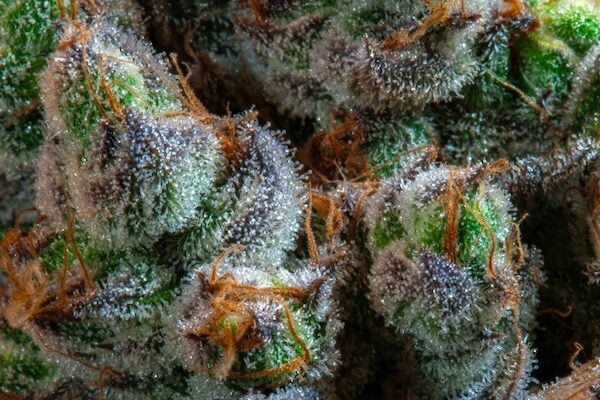
A jeweler’s loupe or scope can magnify the plant’s trichomes by up to 60-100x. If the trichomes appear clear, that typically means it’s too early to harvest. A cloudy or milky shade signals the buds are at peak maturity. Finally, an amber hue often means the cannabinoids may be degrading to CBN, which produces a heavier, body effect. Many growers aim for a practical target of 70-80% cloudy and 10-20% amber. Growers cultivating indica-leaning plants may wait slightly longer to harvest, as this can boost the physical side of the high.
Keep in mind that while pistil color is a valuable visual cue, it’s not always the result of peak maturity: Pistils can darken from environmental stress and handling, which is why the calendar can serve as a useful reference point.
Before harvest, some growers opt to give their plants 24–48 hours of darkness. Some find that this helps protect the aroma and improve trichome quality.
Others “flush” their plants during this timeframe, finding that it can help clear fertilizer salts from the root zone. This practice entails giving your plants water, but not nutrients. While research suggests it has little effect on cannabinoids, terpenes, or finished-flower quality, some anecdotal reports suggest the opposite.
When harvesting your plants, we recommend using clean, sharp pruning shears. If you’re opting for a whole-plant harvest, cut the main stem near the base of the plant. If you prefer to harvest branch by branch, cut each flowering branch where it joins the larger main stem.
How to Trim Weed: Wet vs. Dry Trimming
If you’re a newer grower and aren’t familiar with trimming cannabis, it can be useful to know how wet and dry trimming differ. While neither of these techniques are inherently better, one may be better-suited to your unique growing setup, climate, and schedule over the other.
Wet trimming involves removing your plants’ fan leaves, as well as their small, resinous sugar leaves immediately after harvest, but before the flowers dry. This provides a few different benefits: The process takes less time when the leaves are still soft. Additionally, removing moisture-holding portions of your plant helps reduce the overall risk of mold. Some growers opt for this technique because wet-trimmed buds tend to have a more organized, manicured look.
Dry trimming, by contrast, means keeping the leaves intact and instead hanging the entire plant or branches until they’re dry. The leaves are then removed afterward. This approach can slow moisture loss, protect the flower as it dries, and typically results in a stronger aroma.
A 2024 controlled study found that trimming after drying produced higher levels of most measured mono- and sesquiterpenes than trimming the plants earlier on (Brikenstein et al., 2024).
Trimming Cannabis: Other Considerations
Dry trimming helps prevent the buds from drying out too fast, which can be an especially good choice in drier climates. If you’re unsure how to proceed, just remember that wet trimming is typically best when your drying space has approximately 60% relative humidity. Dry trimming is best-suited to growing spaces with 45% relative humidity or lower.
We recommend using curved-blade trimming shears, nitrile gloves, and having some isopropyl alcohol on hand to clean sticky blades. A trim tray with a kief screen can also help keep your growing area neat and tidy. Throughout the harvesting process, some growers choose to save the sugar leaves and trim; these are still valuable portions of the plant and can be used later on to make hash, rosin, or edibles.
How to Dry Weed: The 60/60 Rule
When drying your cannabis, it is important to keep the harvested plant material in complete darkness, with temperatures of approximately 60–68 degrees Fahrenheit or 15–20 degrees Celsius, and relative humidity levels of 55-65%.
Gentle, indirect air circulation can also help protect your plants and allow them to dry at a more uniform rate. A humidifier or dehumidifier may be useful to have; humidity levels can be measured using an instrument called a hygrometer.
Many growers begin with a practical starting point known as the “60/60” target. In practice, this simply means temperatures of 60 degrees Fahrenheit and relative humidity levels of 60%.
While this is typically a reliable way to help boost bud quality, it’s also helpful to keep in mind that airflow and the density of the buds can impact the overall drying time.
How to Use the 60/60 Rule
If you’re working with whole plants, we recommend hanging them upside down to slow drying. If you’re working with limited space, you can also hang the individual branches instead. Some growers also choose to use drying racks for small buds and popcorn flower. Most flowers need roughly 7–14 days; a very fast dry can leave a grassy or “hay-like” smell because the flower has dried unevenly. It is ready to jar when small stems snap rather than bend, while the buds still feel slightly springy—not brittle or crumbly.
Watch for stagnant, overly humid air, which can encourage mold and bud rot; excessive dryness, which makes flower crumble; and light exposure, which can degrade cannabinoids over time. Avoid ovens, microwaves, and other emergency “fast-dry” methods if quality matters: they may dry flower quickly, but heat and uneven moisture loss can reduce aroma and flavor.
A Note on Freeze-drying Cannabis
Freeze-drying, or lyophilization, is a technique that removes water at low temperatures under a vacuum. While the majority of growers rely upon traditional drying techniques, a small percentage of cultivators choose to freeze-dry their cannabis. This typically occurs if the grower is looking to make boutique-grade hash.
However, it also requires specialized equipment and can carry high upfront costs. That said, it does dramatically accelerate drying time—condensing what would normally take two to three weeks and achieving similar results in just 24 to 48 hours. Even so, some studies caution that freeze-drying won’t automatically guarantee optimum results; aroma, flavor, and potency will all hinge upon a number of variables, such as the type of strain, the temperatures used to freeze the plant before drying, and the drying temperatures themselves. (Addo et al., 2024).
How to Cure Weed
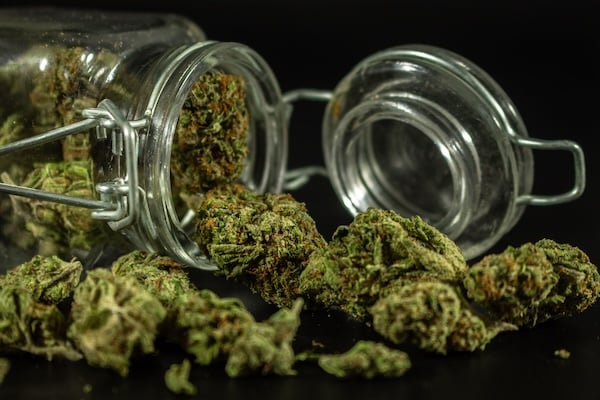
As you might expect, drying removes much of the buds’ water so they can be stored safely for extended periods of time. Curing is what occurs afterward. The process begins by placing your dried buds in airtight jars. Following this process, the remaining moisture equalizes between the center and outside of each bud. Chlorophyll will also break down—although claims that curing “removes all chlorophyll” are too simplistic (Schelbert et al., 2009).
Loosely fill your glass jars about two-thirds of the way up; it is important to avoid tightly packing the buds. Ideally, the jars will have relative humidity levels of approximately 60–65%.
Throughout the first week, open each jar for approximately 10-15 minutes, two to three times per day.
This is also known as “burping” the jars, and it allows trapped moisture to escape while introducing fresh oxygen. This step is important because it prevents mold growth and allows your cannabis to cure evenly, often resulting in a smoother smoke and improved flavor profile.
Throughout week two, burp the jars once daily. Following that, open a few jars a few times per week. Typically, your buds will be usable after two weeks, noticeably more aromatic around four weeks, and reach their highest levels of potency between four and eight weeks.
Keeping Humidity in Check
Growers sometimes use 58% or 62% Boveda packs in their jars; these can help stabilize humidity levels. It can also be useful to place a small hygrometer in at least one representative jar, as one clear reading is going to be more useful than guessing across an entire batch (Boveda, n.d.).
If you take a whiff and encounter a distinct ammonia scent, this often means the buds are too wet. If this occurs, open your jars immediately and consider returning the flowers to their drying rack. If the buds are brittle, add a humidity pack. While some growers use citrus peel or bread, these are best to avoid, as they can introduce extra moisture or contaminants.
If you’re looking to store the buds long-term, plan on keeping them in a cool, dark place inside an airtight glass jar.
Signs of a Rushed Curing Process
Learning to cure cannabis can, understandably, take some trial and error. Like any activity, mistakes themselves can be useful down the line by providing clear clues on what to avoid. For example, a grassy or hay-like smell, a harsh throat hit, or brittle buds that turn black and produce a white, gray ash when burned can indicate that either the drying process, curing process, or both were rushed. If you see these signs, don’t feel discouraged—they’re an excellent reference point for next time.
Post-Harvest Timeline at a Glance
| Stage | Duration | Target temp/RH | What you’re watching for |
|---|---|---|---|
| Harvest | Day 0 | Cool, dark conditions | Cloudy-to-amber trichomes; ripe flowers; clean tools ready |
| Trimming | Day 0 or days 7–14 | Cool, low light | Wet trim immediately, or wait until dry to trim after hanging |
| Drying | Days 1–14 | 60–68°F (15–20°C); 55–65% RH | Gentle indirect airflow; small stems begin to snap; buds stay slightly springy |
| Jarring | Around week 2 | Dark, airtight jars; about 60–65% RH | Loosely filled jars; hygrometer reads in range; no ammonia or damp smell |
| Curing | Weeks 2–6 | Cool, dark; about 58–62% RH | Aroma becomes clearer; smoke becomes smoother; moisture evens out |
| Storage | Week 6+ | Cool, dark, airtight; about 58–62% RH | Stable aroma and texture; no crumble, mold, or stale odor |
A Closing Note
While the cannabis growing process can be unpredictable at times, the steps that take place following harvest are typically easier to control. By keeping an eye on environmental conditions and timing, a grower gets to decide how quickly their plants dry, the quality of the aroma, and the smoothness of the smoke. In fact, a thoughtful approach to curing, trimming, and drying cannabis can even be what separates genuinely excellent flower from just okay bud.
Kicking things off with high-quality seeds is another way to set yourself up for success, whether you’re a beginner grower or seasoned cultivator.
FAQs
How long does it take to dry weed?
Drying cannabis typically takes 7–14 days at around 60°F / 60% RH. The calendar is only a guideline, though. The condition of the buds matters more than the number of days, so use the snap test to help determine when they are ready to move on to curing.
How long does it take to cure weed?
Cure cannabis for a minimum of two weeks before expecting it to be worth smoking, although 4–8 weeks is a better target for noticeable improvements in aroma, flavor, and overall quality. After that, the benefits generally become more gradual, although some strains continue to develop with longer curing.
What humidity should you dry weed at?
Aim for around 60% relative humidity (RH) at 60°F, with the buds kept in a dark space with gentle, indirect airflow. If humidity drops to around 45% RH, the outside of the buds can dry too quickly, leaving them harsh and potentially trapping moisture inside. At around 70% RH, drying takes much longer, and the excess moisture increases the risk of mold and other problems.
Should you wet trim or dry trim?
The better choice depends largely on your drying environment and climate. In a dry environment, leaving more plant material on the buds can help slow moisture loss, making dry trimming a useful option. In a humid environment, wet trimming can help remove excess plant material and allow the buds to dry more efficiently. Neither method is universally better.
Can you dry weed faster without ruining it?
Not really. Faster drying can save time, but it also gives the cannabis less time to develop its aroma and flavor while moisture leaves the plant gradually. The result can be harsher smoke and a less developed terpene profile. If you have no choice but to speed things up, use the least aggressive method possible, keeping the buds in a dark, moderately cool space with gentle airflow rather than using direct heat or intense air movement.
What do you do with the trim?
Instead of throwing away your trim, you can use it to make cannabis butter, edibles, hash, rosin, or tinctures.
Why does my weed smell like hay or grass?
A hay-like or grassy smell is often a sign that the cannabis was dried too quickly or cured for too short a time. When drying and curing happen too quickly, chlorophyll and other plant compounds may not have enough time to break down properly. Some improvement may be possible with additional curing if the cannabis was simply undercured, but curing cannot fully undo the effects of cannabis that was dried too quickly or otherwise improperly handled.
References
Oduola, A. A., Bruce, R. M., Shafiekhani, S., & Atungulu, G. G. (2023). Impacts of industrial microwave and infrared drying approaches on hemp (Cannabis sativa L.) quality and chemical components. Food and Bioproducts Processing, 137, 20–27. https://doi.org/10.1016/j.fbp.2022.10.010
Brikenstein, N., Birenboim, M., Chalupowicz, D., Maurer, D., Kenigsbuch, D., & Shimshoni, J. A. (2024). Optimization of trimming techniques for enhancing postharvest quality of medicinal cannabis. Plants, 13(13), Article 1807. https://doi.org/10.3390/plants13131807
Addo, P. W., Chen, C., Pan, Z., & Khir, R. (2024). Freeze-drying Cannabis sativa L. using real-time relative humidity monitoring: Effects of pre-freezing and drying temperature on quality attributes. Industrial Crops and Products, 208, Article 117772. https://doi.org/10.1016/j.indcrop.2023.117772
Boveda. (n.d.). Two-way humidity control packs. https://bovedainc.com/bovedainc
Schelbert, S., Aubry, S., Burla, B., Agne, B., Kessler, F., Krupinska, K., & Hörtensteiner, S. (2009). Pheophytin pheophorbide hydrolase (pheophytinase) is involved in chlorophyll breakdown during leaf senescence in Arabidopsis. The Plant Cell, 21(3), 767–785. https://doi.org/10.1105/tpc.108.064089