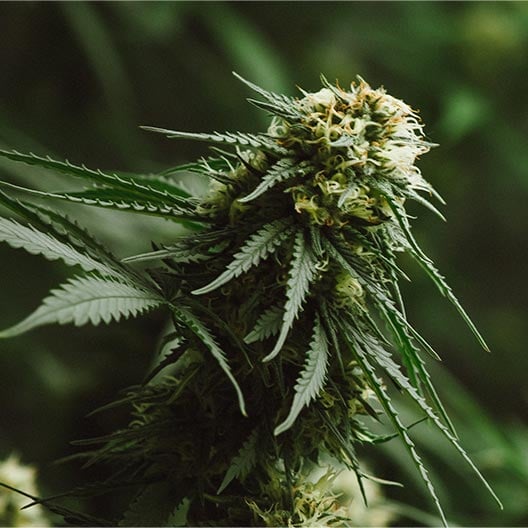
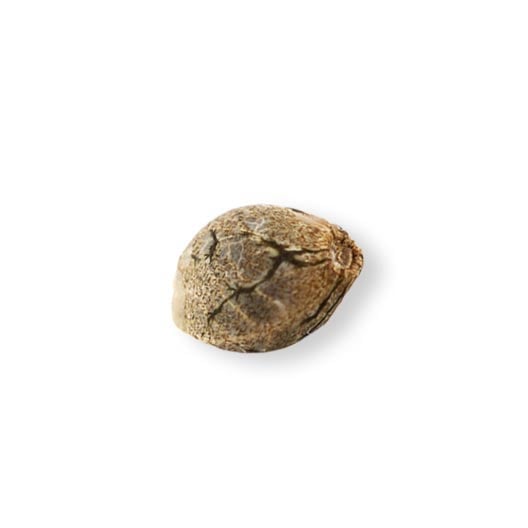
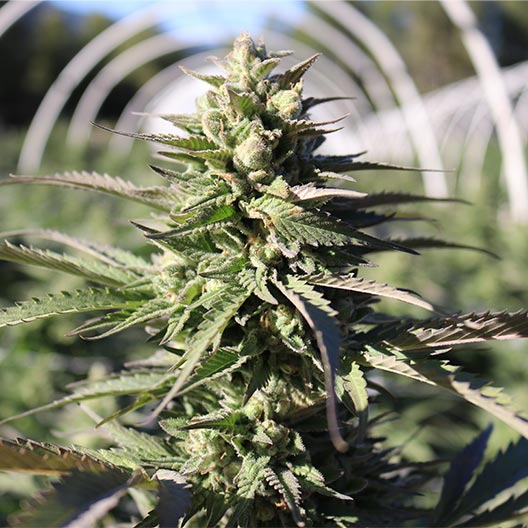
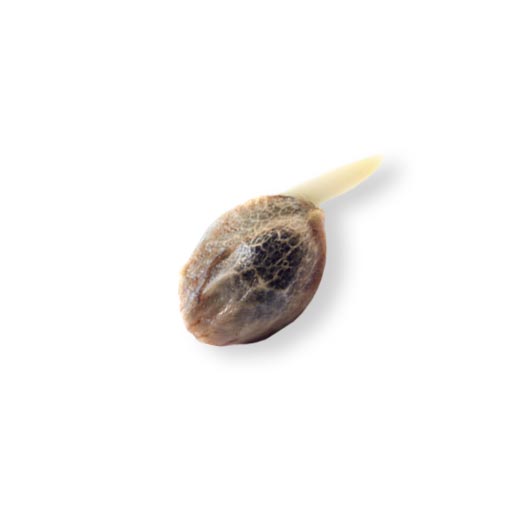
When you’re trying to pull off a great harvest in a small space, your best bet is almost always an indica-dominant or autoflowering strain. These plants are just naturally built for the job. They stay compact and finish flowering quickly, making them a perfect fit for a closet or a small grow tent.
Growing Big in Small Spaces Is Easier Than You Think
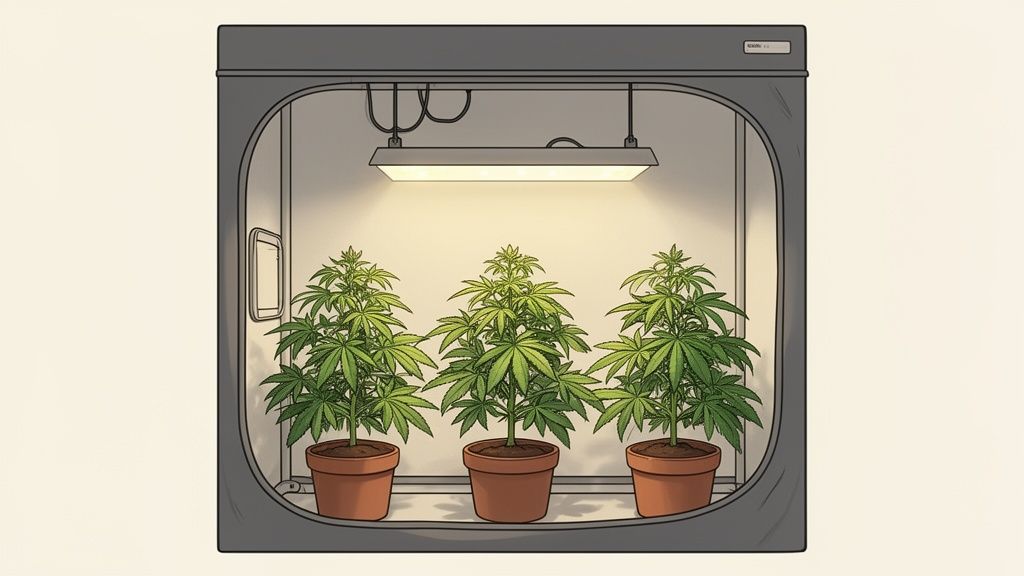
Let’s be real, most of us are working with a grow tent or a spare closet, not some massive warehouse. But a small space doesn’t mean you’re stuck with small results. You can absolutely pull off an amazing harvest, even if your square footage is limited.
The whole game changes when you pick the right genetics from the start. Honestly, it’s the single most important decision you’ll make for your entire grow.
What to Look For in a Cultivar
When you’re hunting for the best strains for a small indoor grow, a few key traits make all the difference. You’re basically looking for a plant that plays nice in tight quarters and doesn’t try to take over the place.
Here’s what you should keep an eye out for:
- Final Height: This one’s a no-brainer. You need strains that stay short, usually under four feet. This keeps them from stretching up into your lights and getting burned.
- Flowering Time: Faster is almost always better in a compact setup. Quicker flowering times mean you get to harvest sooner, and you might even be able to squeeze in an extra grow cycle per year.
- Plant Structure: Look for descriptions like “bushy” or “compact.” Sativa-dominant strains have a nasty habit of stretching, which is a total nightmare in a small tent. Indica-dominant genetics are your best friends here because they naturally grow short and stout.
To make this super simple, I’ve put the essential traits into a quick-reference table. Think of this as your cheat sheet when you’re browsing for seeds.
Key Traits for Small Space Cultivars
| Trait | Why It Matters for Small Grows | What to Look For |
|---|---|---|
| Compact Stature | Prevents plants from outgrowing your vertical space and hitting the lights. | Descriptions like “short,” “bushy,” or “stocky.” Indica genetics are a good sign. |
| Short Flowering Time | Allows for quicker turnover and potentially more harvests per year. Less time for issues to arise. | Autoflowers are champions here. Look for flowering times under 8-9 weeks. |
| Low-Stretch Genetics | Minimizes the explosive growth spurt when you flip to flower, keeping the canopy manageable. | Indica-dominant hybrids or pure indicas. Avoid “lanky” or “stretchy” sativas. |
| High Yield-to-Size Ratio | You want a plant that produces dense, heavy buds without needing a ton of space to do it. | Look for terms like “dense colas,” “heavy producer,” or “great for SOG/SCROG.” |
Getting these things right from the start saves you a world of headaches later on.
The goal is to maximize your canopy without running out of vertical space. Indica and autoflowering cultivars are the MVPs because their genetics are already wired for efficiency, giving you dense buds on a manageable frame.
This whole approach is pretty common for anyone looking to get into home cultivation without a massive investment. If you’re new to the scene, our guide on what micro cultivators should know can give you some great background info. We want you to feel totally confident that you can pull this off, and choosing the right seeds is step one.
Why Indica Cultivars Are Perfect for Compact Grows
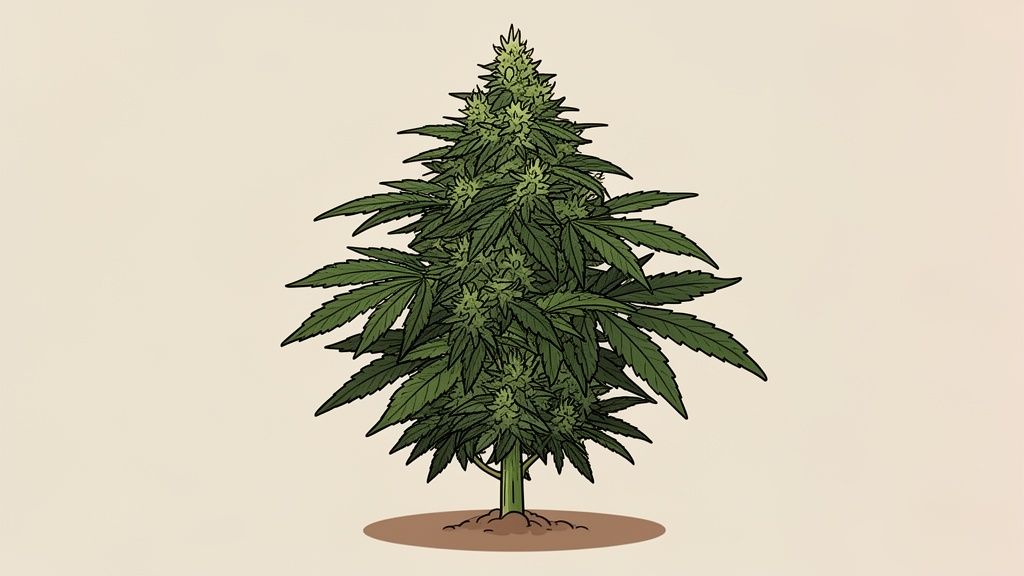
When you’re growing in a tent or a closet, height is everything. This is where indica cultivars really come in clutch. Their genetics naturally make them short and bushy, which is exactly what you want when you’re trying to avoid plants stretching into your grow lights.
Think of them as stout little powerhouses built to pack on dense buds without taking over your whole space. Unlike their lanky sativa cousins, indicas tend to grow outwards instead of upwards, creating a thick, manageable canopy.
This compact structure means you can often fit more plants in a small area. If you’ve ever thought about trying a Sea of Green (SOG) setup where you grow many small plants close together, indicas are practically made for it.
The Indica Advantage: Structure and Speed
One of the biggest wins with indica-dominant cultivars is their shorter flowering time. They typically finish up a couple of weeks faster than most sativas, which is awesome for a few reasons. A quicker harvest cycle means less time for things to go wrong and, of course, gets you to the finish line faster.
This combination of speed and structure makes them some of the best strains for a small indoor grow, hands down. They are just way more forgiving when vertical space is your biggest challenge.
Here’s why they consistently win for compact setups:
- Low Stretch: Indicas don’t have that crazy growth spurt when you flip them to a 12/12 light cycle. This predictability is golden in a small tent.
- Dense Bud Formation: They are famous for producing tight, heavy buds. You get a lot of weight without a lot of height.
- Resilient Nature: Many classic indicas are known for being tough and resilient, handling minor stress or environmental fluctuations better than more sensitive strains.
For a small indoor grow, predictability is your best friend. Indica cultivars offer a reliable, compact structure and a fast flowering period, which takes a lot of the guesswork out of managing your canopy and timeline.
A Classic Example: Northern Lights
You can’t talk about classic indicas for indoor growing without mentioning Northern Lights. This strain is legendary for a reason. It’s been a go-to for growers in tight spaces for decades simply because it’s so dependable and easy to manage.
Northern Lights is pretty much the blueprint for an ideal indoor plant. As an iconic indica purebred from 1980s California-Afghani crosses, it remains a top choice for its sheer reliability. This compact powerhouse usually tops out at 80-100 cm, making it perfect for stealthy 2×4 tents, and can produce 450-550 grams per square meter in just 7-9 weeks of flowering. That’s a huge amount of bud from a small footprint.
You can learn more about how genetics impact your grow by checking out some great tips on choosing quality seeds on blimburnseeds.com.
Its consistent performance has made it a favorite among both new growers and seasoned experts who need to maximize their yield in a limited area. When you choose a proven indica like this, you’re setting yourself up for success from day one.
Autoflowers: The Simple Choice for Indoor Growers
If you’re looking for the most direct path to a solid harvest in a tight space, autoflowers are your ticket. Seriously. These plants are a blessing for new growers and seasoned pros who just want a simple, efficient cycle.
So, what’s the secret? Autoflowers are bred with ruderalis genetics, which means they flip from vegetative growth to flowering all by themselves. No need to mess around with changing your light schedules from 18/6 to 12/12. They run on an internal clock.
This single trait removes a huge amount of guesswork and potential for error. It’s a set-it-and-forget-it vibe that lets you focus on the basics like keeping your plants happy with water and nutrients.
Built for Speed and Stealth
Beyond their automatic flowering trick, autoflowers are just naturally compact. They seem practically designed for small indoor grows, rarely stretching past three or four feet tall. This short stature is a massive advantage when you’re dealing with the limited vertical space of a closet or a small grow tent.
Their other superpower is speed. Most autoflower cultivars race from seed to harvest in an incredibly fast 8 to 10 weeks. Just think about that, you could be trimming your finished buds in a little over two months.
Autoflowers combine a compact size with a rapid growth cycle, making them the ultimate choice for growers who value simplicity, speed, and discretion. You get a full harvest without the long wait or the hassle of light schedule management.
This quick turnaround means you can potentially squeeze in multiple harvests in a single year, even from the tiniest setup. More harvests mean more variety and a steady supply, which is a pretty sweet deal.
Our Favorite Autoflower Strains
Here at Pacific Seed Bank, we’ve got a whole lineup of autoflowering strains bred specifically for stealth and efficiency. They stay short, finish fast, and still deliver impressive results. A couple standouts that our customers consistently love for their compact grows include:
- Blueberry Auto: This one delivers amazing flavor in a small package and is incredibly forgiving for new growers.
- Northern Lights Auto: We already mentioned the original, and the auto version is just as reliable but even faster and simpler to manage.
Because they’re so popular and easy to handle, we put together a complete guide explaining exactly what autoflowering marijuana seeds are and how they can simplify your growing journey. Picking an auto is like taking the express lane to harvest day.
Alright, let’s get into the good stuff. We’ve talked about the why behind choosing indicas and autos for small spaces, but now it’s time to name names. I’ve gone through the Pacific Seed Bank catalog and handpicked a few cultivars that I personally recommend for anyone working with limited indoor real estate.
Think of this as your personal shopping guide. We’re zeroing in on proven winners that deliver big results without taking over your entire tent.

Big Bud: The High-Yielding Compact Queen
First up is a strain that absolutely lives up to its hype: Big Bud. This one is a legend for a reason and a total game-changer for small setups. It’s an indica-dominant hybrid that stays impressively compact while pumping out ridiculously large, dense colas. If maximizing your yield is priority number one, this is one of the best strains for a small indoor grow you can possibly choose.
It’s just engineered to produce. Big Bud has been a favorite since the 1980s because it’s so damn reliable for space-limited growers. This cultivar is a dream for closets or mini-tents, often delivering massive yields of up to 600 grams per square meter indoors.
Plus, its flowering time is super quick at just 8 to 9 weeks, which means you could potentially squeeze in three or four harvests a year. You can see how it stacks up against other heavy hitters by checking out this guide to top-yielding cannabis strains on groweriq.ca.
We offer Big Bud in both feminized and autoflower versions, so you can pick the style that best fits your grow. The auto is even faster, while the feminized photoperiod version gives you more control over its veg time if you want to do some training.
Girl Scout Cookies: The Potent and Manageable Hybrid
Next on the list is an all-time classic, Girl Scout Cookies (GSC). This indica-dominant hybrid is famous for its incredible flavor and potent effects, but what makes it a star for small grows is its structure. GSC stays relatively short and develops a strong central cola with sturdy side branches.
It’s incredibly manageable and responds beautifully to Low-Stress Training (LST). By gently bending its branches, you can easily create a flat, even canopy that soaks up every bit of light, a simple technique that can seriously boost your final harvest.
Here’s why GSC makes the cut:
- Ideal Structure: It has a naturally bushy but not sprawling shape, perfect for filling out a small tent without touching the walls.
- Dense Buds: GSC is known for producing rock-hard, resin-coated buds that add up to a weighty harvest.
- Low Stretch: When you flip it to flower, it doesn’t have a crazy growth spurt, making height management a breeze.
Choosing a strain that’s easy to train like Girl Scout Cookies can make a huge difference in your final yield. A little bit of LST goes a long way in maximizing light exposure to every bud site on the plant.
Pink Wasabi Auto: The Speedy Stealth Option
For growers who value speed and simplicity above all else, I have to recommend Pink Wasabi Auto. This is one of those autoflowering cultivars that’s just perfect for a stealthy setup. It races from seed to harvest in as little as 8 to 9 weeks and stays incredibly short the entire time.
It’s the kind of plant you can tuck away in a corner and practically forget about. Pink Wasabi Auto is super resilient and doesn’t demand much, making it an excellent choice for first-time growers or anyone who just wants a low-maintenance cycle. You get a fantastic harvest without the long wait or the hassle of managing a larger plant.
Easy Training Techniques to Maximize Your Yield
Picking the right genetics is a huge first step, but training your plants is how you really make the most of a small space. This is where you get hands-on and can seriously boost your final harvest without needing any fancy or expensive equipment.
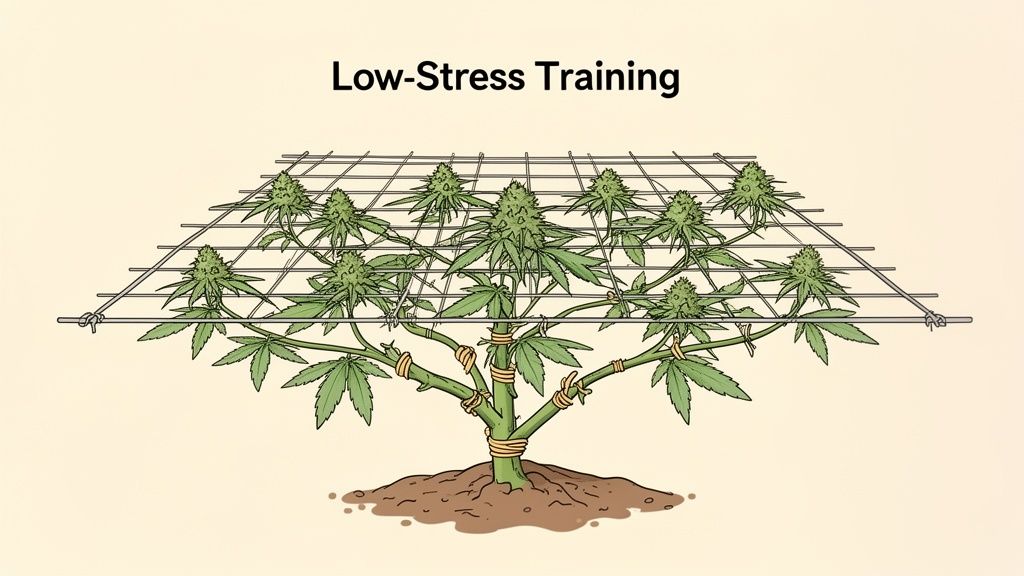
We’re talking about Low-Stress Training (LST), a simple technique that’s perfect for anyone trying to maximize their canopy in a compact setup. It’s exactly what it sounds like, you’re not hurting the plant, just gently guiding its growth to work for you, not against you.
The whole point of LST is to break the plant’s natural tendency to grow one main cola straight up toward the light. Instead, you gently bend and tie down the main stem and side branches so they grow horizontally. This creates a flat, even canopy where all the bud sites get direct, high-quality light.
Getting Started with Low-Stress Training
You don’t need much to get started, just some soft plant ties or coated wire and a little patience. The best time to start is when your plant is young and flexible, usually once it has 3-4 sets of leaves (or nodes).
Here’s the basic idea:
- Bend the Main Stem: Carefully and slowly bend the main stem over until it’s almost parallel to the soil. The key word is gentle. You don’t want it to snap.
- Secure It Down: Use a plant tie to secure the stem to the side of your pot. This holds it in place and encourages the side branches to start growing upwards towards the light, becoming their own mini-colas.
- Repeat as Needed: As the plant grows, you’ll continue to tie down new growth, shaping the plant to create a wide, flat canopy that fills your entire space.
This simple process tricks the plant into distributing growth hormones more evenly, resulting in multiple big colas instead of just one. All those lower branches that would have produced tiny “popcorn” buds now have a chance to become top-tier flowers.
Low-Stress Training is all about turning a Christmas tree shape into a flat tabletop. More light hitting more bud sites directly equals a bigger, more consistent harvest from top to bottom.
Taking It a Step Further
Once you’ve got the hang of LST, you can easily combine it with other techniques for even better results. For example, many growers trim away the lower foliage that isn’t getting much light. This process, which you can read about in our guide on what lollipopping is, helps focus the plant’s energy on the top colas where it matters most.
Another great next-level option is the Screen of Green (SCROG) method. This involves placing a screen or net over your plants and weaving the branches through the openings as they grow. This creates an incredibly even canopy, ensuring every single bud gets a piece of the action from your grow light. It’s one of the most efficient ways to use a small footprint.
A little bit of training really does go a long way. It might feel like extra work at first, but the payoff at harvest time is absolutely worth it.
Your Top Questions About Small Grows, Answered
We get tons of questions from growers just starting to figure out how to make the most of their limited space. It’s a common hurdle, so we figured we’d tackle the most frequent ones right here. Think of this as your cheat sheet for getting a killer harvest from a tiny footprint.
How Many Plants Can I Grow in a 2×2 Tent?
This is the classic “it depends” question, but I’ll give you a straight answer. For a little 2×2 foot tent, you can comfortably grow anywhere from one to four plants. The real deciding factors are the strain you pick and how much you plan on training it.
If you’re running a bushy indica and just letting it grow naturally, one or two plants is probably your sweet spot. Any more and they’ll be fighting for light and air. On the flip side, if you’re using a technique like the Sea of Green (SOG) with a bunch of smaller pots, you could absolutely pack four in there.
The golden rule is to avoid overcrowding at all costs. You need good airflow between your plants. It’s non-negotiable for preventing mold and other headaches down the road. If you’re new to this, my advice is simple: start with just one or two plants. Get a feel for how they stretch and fill out your specific tent first.
Are Feminized or Autoflower Seeds Better for Small Grows?
Honestly, both are fantastic choices for compact setups. There’s no single “best” option here; it really boils down to your personal goals and growing style.
- Feminized seeds put you in the driver’s seat. You have total control over when the plant starts flowering because you trigger it by changing the light schedule. This is perfect if you want to use training techniques like LST or a SCROG net to maximize your canopy.
- Autoflowers are all about speed and simplicity. They flip to flower on their own internal clock, stay naturally compact, and finish fast. This makes them one of the best bets for a small indoor grow, especially if you’re a beginner or just want a quick turnaround between harvests.
Here at Pacific Seed Bank, we only sell feminized and autoflower seeds, so whichever path you choose, you’re covered.
What Is the Minimum Light I Need for an Indoor Grow?
You can definitely get amazing results in a small space without some ridiculously overpowered, expensive light. For a typical small tent, like a 2×2 or 2×4, a quality LED light somewhere in the 100 to 250-watt range is a solid place to start.
Modern LEDs are a game-changer for small-space growers. They’re incredibly efficient and don’t pump out a ton of heat, which is a massive advantage in a confined area. The most crucial thing is to get a full-spectrum light that provides all the wavelengths your plants need to thrive through both veg and flower.
Don’t cheap out on your light. It’s one of the few pieces of gear that directly dictates your final yield and the quality of your buds. A good light is an investment that truly pays for itself, harvest after harvest.
Ready to find the perfect seeds for your setup? Pacific Seed Bank has over 1,400 autoflowering and feminized cultivars to choose from. Check out our full catalog and get your grow started today.