


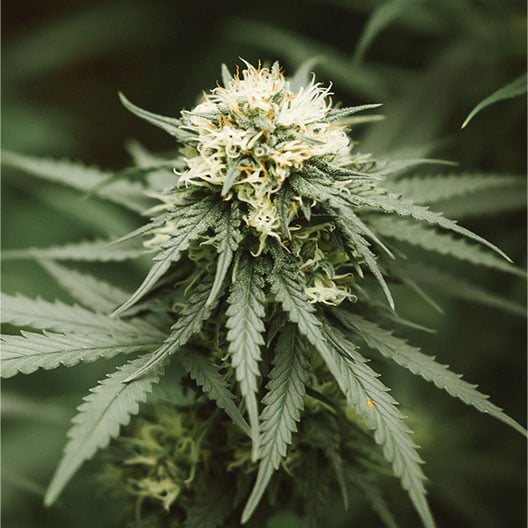
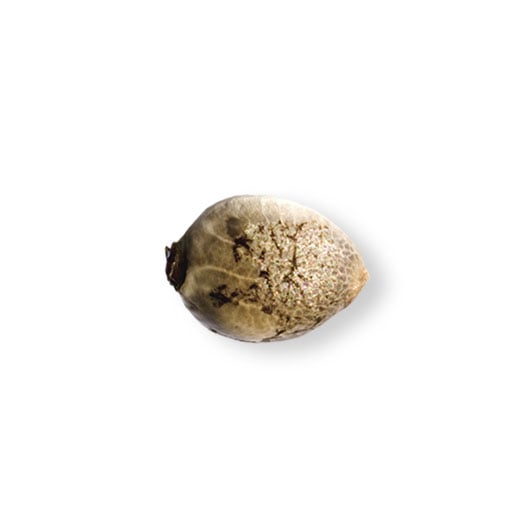

Description
Banana Pudding: A Dessert-Inspired Cali Hybrid
Banana Pudding was created by crossing two legends: Girl Scout Cookies and Banana OG. The result is a 70% indica, 30% strain known for its exceptional potency and distinct, fruity flavor.
Banana Pudding’s 31% THC content places it in a class of its own. These levels fall solidly within the upper range, even among other high-potency strains. As such, this pick is a major hit with growers who prefer psychoactive effects cranked to level ten. It’s known to produce an instant hit of euphoria alongside an altered perception of space and time. This hybrid’s indica dominance only improves the supercharged high, making for a smoke that’s physically relaxing yet mind-bending all at once.
Fans also appreciate this strain’s dessert-like profile and the way its flavors only add to the smoking experience. Banana, vanilla, and cream notes delight the senses, offering a decadent spin on old-school intensity. Add all these factors up, and it makes sense why Banana Pudding seeds are an especially big hit among growers who prefer their dessert strains with a side of real, psychoactive weight.
How to Grow Banana Pudding
As an indica-dominant strain, Banana Pudding produces heavy, resinous buds with a compact structure. While these traits are the very thing that produce this strain’s intense high, their denser structure can sometimes require a bit of extra care. Below, we’ve highlighted a few easy-to-follow tips for growers of all skill levels.
Temperatures
Banana Pudding performs best under consistent temperatures. During the vegetative stage, growers are encouraged to aim for 72-79 degrees Fahrenheit (22-26 degrees Celsius) and a slightly cooler atmosphere of 64-72 degrees Fahrenheit (18–22 degrees Celsius) at night. These levels will help support your plants’ development while avoiding the unnecessary stress that can often come with excess heat or chilly temperatures.
Humidity levels
Your plants will typically respond best to humidity levels around 45–55% in the early flowering stage, followed by a drop to 40–45% as the buds begin to thicken. The reason stability matters here is because of your Banana Pudding plants’ structure: dense buds can often have small, internal pockets where air moves slowly, and if temperature or humidity shifts too sharply, those inner zones can trap moisture. Keeping the environment consistent helps keep your plants happy, and increases the likelihood of each bud flourishing evenly from the inside out.
Bud Maturity
While consistent temperatures and humidity levels make for a more even growing process, Banana Pudding’s buds can sometimes appear fully finished on the outside, but even under the best of circumstances, they may be a little slower to develop on the inside.
This is because the outer calyxes often mature first, giving a frosty, finished look at first glance. However, just because they appear done on the surface doesn’t mean the inner portions of the bud aren’t still developing.
Because these inner areas don’t receive as much light, they can sometimes move on a slightly slower timeline. Thankfully, growers can easily magnify the buds and peek slightly beneath the surface using an instrument called a loupe. This tool will help give you a better sense of just how mature your buds actually are.
Aroma and Flavor
This strain’s dominant terpenes include limonene, caryophyllene, and linalool. These compounds work together to shape Banana Pudding’s profile in a way that mirrors both its parent strains, yet produces a fragrance that is entirely new.
Limonene contributes a bright, sweet edge that lifts the overall fragrance. Caryophyllene adds grounded elements such as pepper and spice, which provide a pleasant contrast and ground the profile. Linalool softens everything out with its smooth, floral quality, offering a complex, yet cohesive finish.
Yields, Flowering Times, and Harvest
In true indica-dominant fashion, Banana Pudding’s flowering time is relatively efficient, clocking in at around 55–65 days. With appropriate care, this strain can also produce impressive indoor yields of up to 500 grams per square meter. Outdoor growers can anticipate a generous harvest as well, with many cultivators reporting yields of up to 700 grams per plant.


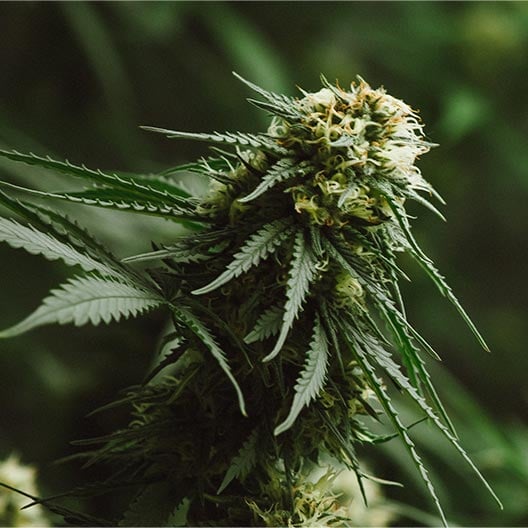



SCROG was the right call for this genetics and I wish I’d started with it instead of figuring it out on my second run. The lateral branching fills a net efficiently and the tight internodal spacing means every node along the trained branches produces a genuine heavy cola rather than airy secondary growth. The canopy after three weeks of post-flip tucking looks like a perfectly organized garden rather than a contained chaos. The yield reflects the efficiency.
Rosin return: 21.8% bud-to-rosin at 68°C, 90 PSI. Above-average for indica-dominant hybrid. Trichome density and resin quality from the Banana OG parentage produce excellent solventless extraction results.
Run 1 vs Run 2 comparison in same tent. Run 1: no defoliation, RH averaged 54% in flower, one mold incident (caught and removed), yield 432g/m². Run 2: defoliation at days 14 and 28 of flower, RH maintained 47%, zero incidents, yield 521g/m². The defoliation improved airflow to the interior bud structure, which is the specific mold risk point for this genetics. The 89g/m² yield difference is primarily attributable to the airflow improvement.
SCROG deployment: net filled at day 19 post-flip. Dense lateral branching from Banana OG genetics creates productive bud site distribution along full branch length. Most yield-efficient training technique for this genetics.
Outdoor Banana Pudding performance exceeded my expectations for a strain documented primarily as an indoor performer. The two plants in 30-liter fabric pots (Mediterranean climate, full sun from May through October harvest) showed the characteristic lateral branching of the indica structure adapted to the space available outdoors — they grew wider and more branched than their indoor counterparts, with individual lateral branches reaching 50-60cm in length. The bud development along those branches was continuous rather than concentrated at tips, which is the outdoor expression of the tight internodal spacing that makes SCROG efficient indoors. Total yield of 1,708g across two plants is the most productive outdoor run I’ve had.
Pheno selection matters for this genetics. I ran four seeds. Two were nearly identical, good, and forgettable in a lineup. One had more gas than banana. One had natural purple coloration and the most complete banana-vanilla-nutty aroma I’ve encountered. Kept that one from clone. Run it every cycle.
Dense buds. Mold risk. Keep RH below 50% from week five. Yields 490-540g/m² when managed correctly. Worth it.
Effect arc documented across multiple sessions: euphoric uplift (onset rapid, 4-5 minutes), creative-giggly first phase (20-40 minutes), progressive body ease (60-90 minutes), settled heavy relaxation (60-120 minutes). Total: 200-240 minutes. Consistent. No sedative crash. The arc is smooth.
Outdoor trial: Mediterranean-temperate climate. Two plants in 30-liter fabric pots. Final heights: 162cm and 174cm. Yield: 817g and 891g per plant. Harvest October 3. Night temperature drop in late September (13-15°C) produced purple fan leaf coloration and partial bud exterior pigmentation. Aroma at harvest: more tropical fruit depth than indoor runs, consistent banana-vanilla core. Cured outdoor flower rated more complex by three evaluators compared to indoor at equivalent cure time.
Something I want to say that most Banana Pudding reviews skip: the mold management requires specific attention and it’s specifically about the bud structure rather than generally about humidity. The dense, tightly packed calyxes create interior spaces in the bud where humidity can accumulate even when your tent sensor is reading appropriately. I found this out because my canopy-level sensor read 48% while a sensor I placed at pot level (reading the micro-environment near the lowest colas) read 57%. The 9-point differential was the mold risk. The solution: defoliate the lower canopy to improve airflow, add a fan aimed at the pot level from week five, and maintain 44-47% at canopy level so the pot-level environment stays below 55%. That’s specific and it matters.