If you’re new to cannabis growing, you may be diving into topics like watering, nutrients, lighting schedules, and how to germinate your seeds. But there’s another important skill that may be less obvious: knowing how to spot the early signs of female plant characteristics.
Being able to identify female cannabis is important because female plants alone develop the potent, resin-coated flowers responsible for producing a high. Male plants do produce flowers, but these small, grape-like clusters generate pollen, not resin, and have much lower levels of cannabinoids and trichomes.
While male plants are useful for other reasons, such as breeding and creating new strains, they can also easily pollinate surrounding female plants. If this occurs, the female plants will shift their energy toward producing seeds, rather than resin, making for buds with reduced potency and flavor.
The good news? Your plants will provide clear clues about their sex long before pollination occurs.
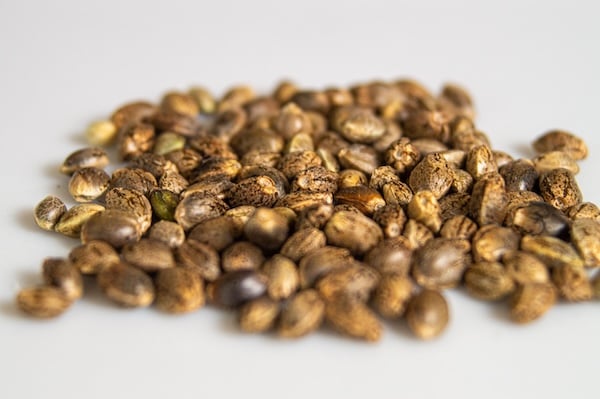
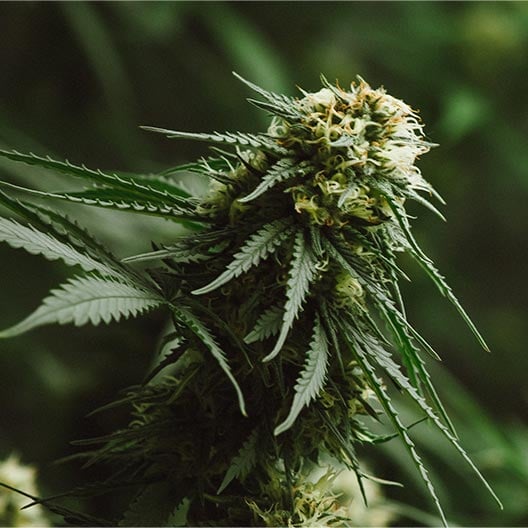
Image credit: Derrick Brown
Feminized Seeds: A Simpler Starting Point
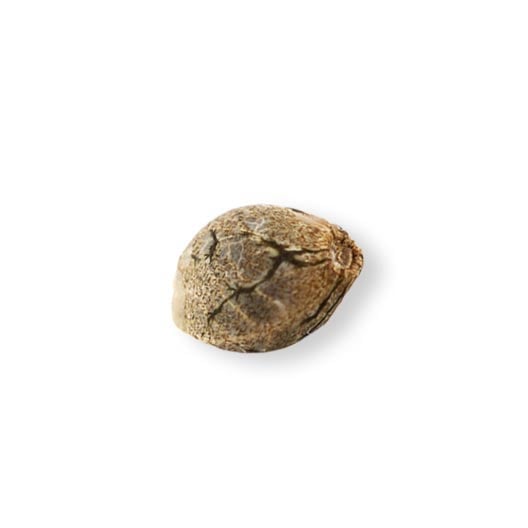
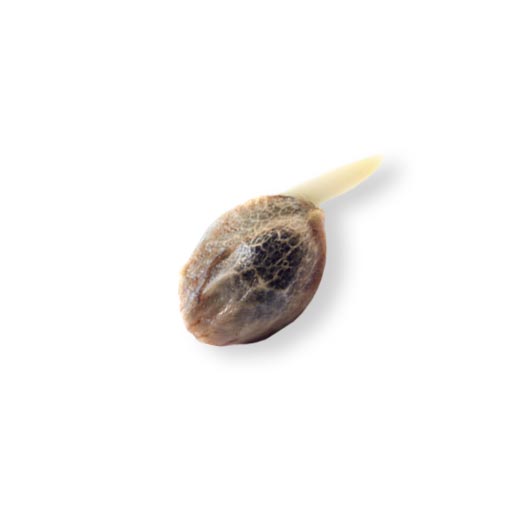
Throughout cannabis history, a batch of seeds would produce, more or less, a 50:50 split between female and male cannabis plants. This all changed in the late ‘90s, when a Holland seed bank changed the way things were done. Henk van Dalen is credited with creating the first feminized seeds in 1998. (Dutch Passion, 2019) This new type of seed provided growers with a streamlined way to cultivate resinous harvests and sidestep most, if not all, of the challenges associated with growing male and female plants in close proximity.
While feminized seeds aren’t a 100% guarantee of an all-female crop, they dramatically reduce the likelihood of encountering male seeds. Our expansive seed library contains exclusively feminized seeds and offers photoperiod and autoflowering options alike. These include classics like Acapulco Gold, sativa-rich hybrids including the Mimosa strain, and indica-dominant picks such as the Glitter Bomb strain.
While the odds of a male plant or a hermaphrodite plant are very low, it’s still a good rule of thumb to be able to identify the early signs of female plant traits, and vice versa. In this guide, we’ll cover when these clues emerge and how to confidently distinguish them from one another. Knowing what to look for—and when—can save new growers time and help them make the most out of months of effort.
-
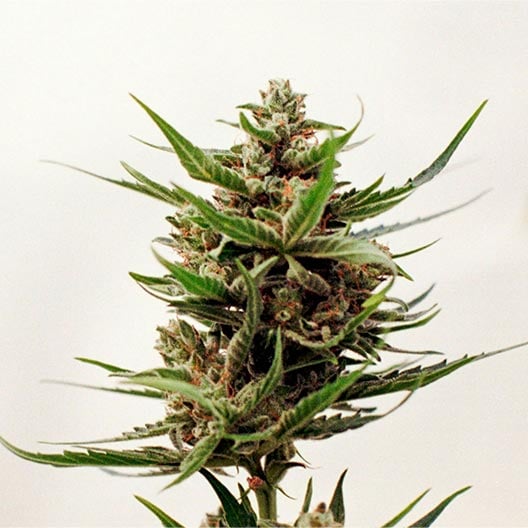
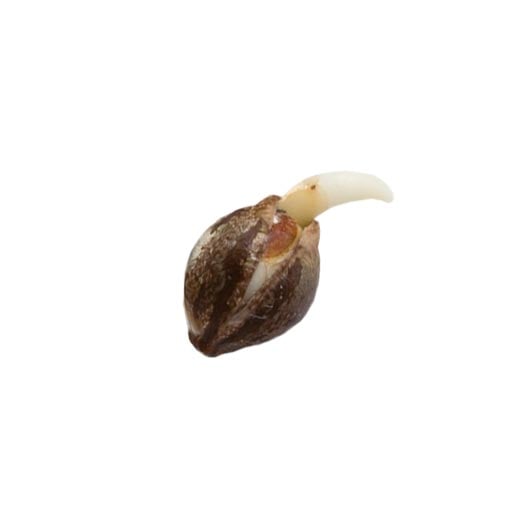
 Glitter Bomb Seeds$33.05Add to cartAdd to cart
 Select options
Known for its potency and glittery appearance, Glitter Bomb is an Indica-dominant strain of cannabis. It affects the mind first, with uplifting clarity, euphoria, and the giggles before offering total body relaxation.
Select options

What are the first signs of a female plant?
The clearest way to spot a female plant is to look for small green, pod-like bumps where a branch meets the main stem, often with one or more fine white hairs emerging from them. These hairs are typically a clear giveaway that your plant is developing female flowers. The bumps themselves are known as “calyxes,” while the white hairs are called “pistils.” Together, they signal early female flower development.
Female plants will also continue forming additional calyxes and more pistils across multiple nodes as they mature, creating the early structure for your plant’s future flower sites. Male plants never produce these hairs. Instead, they form round pollen sacs, making pistils a key trait either way.
When to check for these traits
For the first few weeks of growth, your cannabis plants may look very similar to one another. If you lined them up side by side, it would be difficult to determine which were male or female based on appearance alone.
However, your plants will start to develop distinguishing traits around four to six weeks into the growing process, or during the “pre-flowering” stage. In an outdoor setup, this shift usually begins when the days start to grow shorter towards the end of the summer. In an indoor setup, you’ll start seeing clear visual cues become visible as you begin to approach the flowering stage.
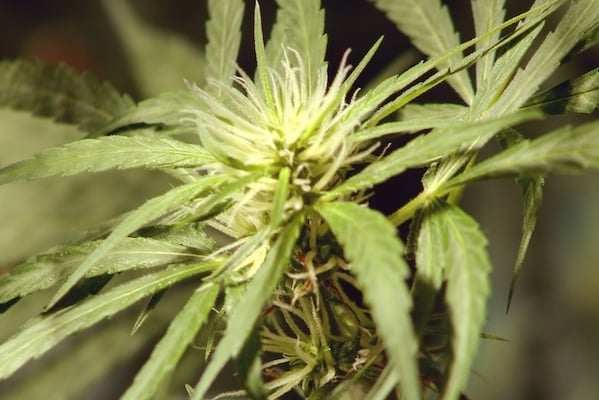
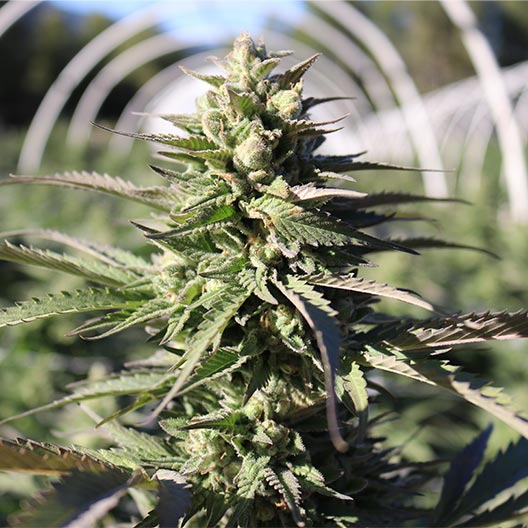
Image credit: Max Sabino
Where to look for pre-flowers
We recommend beginning at the nodes, or points where your plants’ branches meet the main stem. These areas will provide a clean snapshot of your plant’s overall development. Check multiple nodes and decide if you see the beginnings of calyxes or pistils. At first, these structures will be very small and easy to miss with the naked eye. However, using a magnifying glass or loupe will allow you to see more clearly, and much earlier in the growing process.
What do female pre-flowers look like?
As mentioned above, female plants develop small, tear-shaped structures called calyxes and have a few fine, bright white pistils. These thin, wispy hairs—or their absence—are one of the most reliable ways to know if your plant is female or male.
Key signs of a female plant include:
- Small, tear-shaped calyxes at the nodes
- One or two thin white pistils emerging from the calyx
- Structures that sit close to the stem
- Increasing numbers of pistils as development continues
Common misidentification: stipules
One common challenge for beginners is confusing pistils with stipules. Stipules are small, pointed green growths found at every node on both male and female plants. Because they appear early and can resemble tiny, calyx-like spikes, it’s easy to mix the two up. While both are green, stipules are pointed, leaf-like, and entirely pistil-free, whereas female pre-flowers are teardrop-shaped and ultimately produce delicate, white hairs.
How to identify male cannabis plants
While learning to recognize female traits is key, identifying male characteristics is just as useful. Both approaches lead to the same outcome: confirming plant sex early and avoiding unwanted pollination. Male plants develop pollen sacs instead of pistils. These appear at the nodes as small, round balls that often resemble tiny clusters of grapes. Unlike female pre-flowers, they do not produce hairs.
As they mature, these sacs become more noticeable and may form on short stalks that extend slightly away from the stem.
Key male characteristics include:
- Small round balls instead of tear-shaped calyxes
- No white pistils (hairs)
- Clustered structures resembling miniature grapes
- Growth that appears slightly spaced or dangling from the node
Sometimes, a plant may produce both pollen sacs and pistils. Hermaphrodite plants can occur due to environmental factors, stress, or genetics, and may also pollinate nearby female plants. For this reason, it is important to separate them as well.
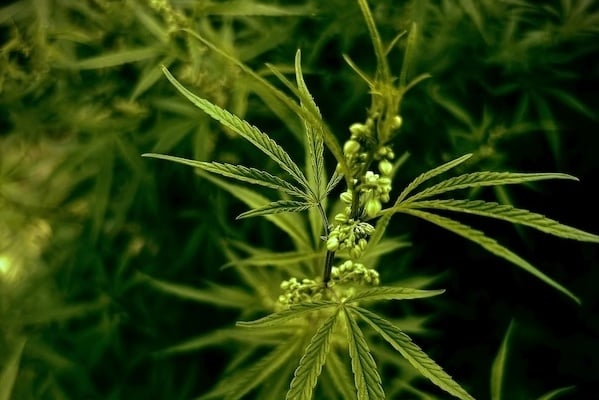
Image credit: Thakur Abhay Singh
Can you identify female cannabis plants by size or shape?
It’s common to hear that male plants grow taller, stretch more, or look structurally different from females. While there can be subtle variations in any one plant, these traits aren’t consistent enough to truly rely on. Plant height, leaf density, and overall shape vary widely between cultivars and growing conditions, which is why checking pre-flowers is a more reliable approach.
When to make a decision
The pre-flowering stage is when female traits become more obvious. Calyxes multiply, pistils increase in number, and early flower sites begin forming across several nodes. In contrast, male plants begin showing small, round pollen sacs at the same node locations, and continue to diverge in appearance.
Ultimately, your approach should include waiting long enough to see clear differences during the pre-flowering stage—but not so long that your plants risk pollination. In general, the decision-making window can last up to a few weeks. In addition, pollen sacs are usually clearly visible before they actually open, giving growers time to identify and remove them. If you still feel uncertain, the most reliable approach is patience. Rechecking after a few days tends to snap things into focus, especially because male and female pre-flowers only become more distinct as time passes.
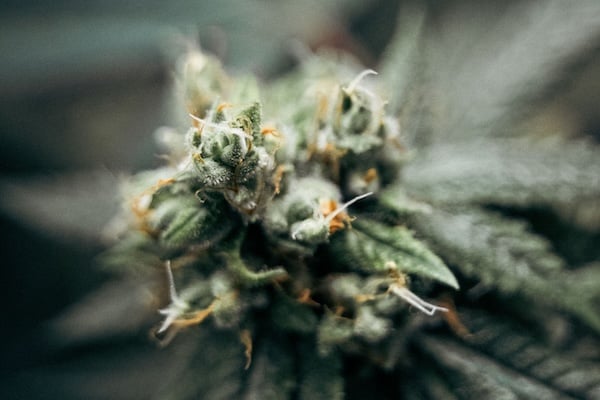
Image credit: Manuella Schorchit
Final Thoughts
While our feminized seed library nearly eliminates the odds of encountering a male plant, learning how to identify female plants is still one of the most useful skills you can develop as a grower. Once you know what to look for, such as pistils, calyxes, and early flower sites, it becomes much easier to understand what’s happening in your garden.
The main thing is to stay observant without rushing the process. A few minutes of checking each week is usually enough to catch the early signs and help ensure your harvest reaches its maximum potential!
References
Dutch Passion. (2019). History of Dutch Passion. https://dutch-passion.com/en/blog/history-of-dutch-passion-n874
FAQs
Can nutrient deficiencies make it more difficult to identify female plants?
They can. A plant that is struggling with a significant nutrient deficiency often grows more slowly and may take longer to reach the pre-flowering stage. Stunted growth can also make pre-flowers smaller and more difficult to spot, especially for first-time growers.
Will training techniques impact when a plant looks clearly male or female?
Topping, low-stress training, and other shaping techniques can sometimes temporarily slow growth while your plant recovers. In some cases, that recovery period may slightly delay the appearance of pre-flowers, but the approach for identifying those remains the same.
How many nodes should a plant have before checking?
Many growers start inspecting plants once they’ve developed five or more nodes, as greater numbers provide a more complete picture.
Can environmental stress affect how clearly female traits show up?
Yes. Factors like inconsistent light, temperature swings, or overwatering can affect your plants’ development. While a stressed plant’s pre-flowers can appear on a normal timeline, they may be a little trickier to read at first.
Is there a reliable way to ensure female plants from the start?
The simplest option is to start with feminized seeds. While perfection is never guaranteed in cannabis cultivation, feminized seeds eliminate much of the guesswork for new growers. Our library is comprised exclusively of feminized seeds and provides growers with a broad selection of strains, from autoflowering plants to cannabis classics to modern-day hybrids.