At first glance, deliberately pinching and bending a healthy cannabis stem may seem like an unconventional choice. However, this technique, known as super cropping, is something many growers do deliberately, as it helps promote an even canopy and provides bud sites with greater access to airflow and light.
Super cropping is a form of high-stress training (HST) that involves gently compressing the stem before it’s bent and gently guiding the branch outward while ensuring its outer skin remains intact. When done correctly, supercropping reshapes a plant’s growth while ensuring the bent branch remains connected, functional, and able to recover. While the history of this technique is difficult to trace, we do know that “super cropping” was an established term among cultivators and horticulturists by the early 2000s.
Today, many growers favor this approach because it requires no specialized equipment and is, essentially, free. However, its success does hinge upon overall plant health and careful timing. While a successful bend can help a grower manage plant shape and work toward a more even canopy, an overly forceful one can split a stem and slow recovery.
This guide explains when, how, and why to use super cropping. Below, we’ll walk growers through the process step by step and cover topics such as how to respond if a branch is bent too aggressively.
What Is Super Cropping?
Super cropping is a high-stress cannabis-training (HST) method that involves compressing a stem until its internal tissue becomes pliable enough to bend—all while avoiding any damage to the outer skin, or epidermis.
But, why did this technique develop in the first place? When left unchecked, a cannabis plant’s branches tend to follow their natural upward path. This can create a more vertical structure, which tends to physically block the lower bud sites from airflow and light, resulting in diminished potency and overall health. Super cropping weed solves this issue by allowing growers to redirect select branches outward and encouraging a flatter, more horizontal canopy.
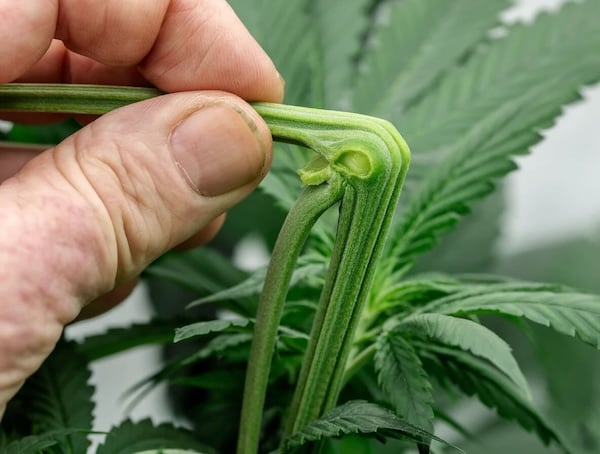
As the injured area heals, it often thickens into the firm, dense point growers call a “knuckle.” Some growers interpret that swelling as evidence of improved water and nutrient transport. However, some reason that knuckle development and increased health don’t necessarily have a causal relationship: they’re just two co-occurring effects of super cropping. If a plant performs better after its structure is changed, the more plausible explanation is the altered canopy—not the knuckle itself.
It can also be helpful to know how super cropping compares to other techniques. For example, low-stress training (LST) involves bending a branch without damage, while topping cannabis and fimming involve actually cutting the plant.
Note: Fimming is a cannabis training technique where the newest growth at the tip of a stem is partially cut or pinched off, rather than removing the entire growing tip as with topping. This method interrupts apical growth and encourages multiple new shoots to develop from the remaining growth.
Why Is Super Cropping Considered High-Stress Training?
Super cropping is part of the HST family because it deliberately injures plant tissue. LST differs from HST because while it also helps guide a plant’s structure and shape, it does so gradually without crushing the stem. Topping and fimming are high-stress methods as well, although unlike super cropping, these actually remove growth by physically cutting the plant.
Does HST increase resin production?
Many growers believe that physical stress directly boosts resin production. While this observation is supported by plenty of anecdotal evidence, it’s not yet clear whether it holds up under scientific scrutiny.
What is true: research confirms that actual tissue damage (like stem-splitting or leaf-cutting) can stimulate cannabinoid and terpene synthesis under certain circumstances. (Serraf & Bernstein, 2026). However, this boost depends largely on which organ is damaged and when.
Flexing, bending, or compressing stems during the super cropping process may increase resin production. However, it does provide a more established benefit by triggering thigmomorphogenesis—a physiological response that increases stem thickness and structural strength.
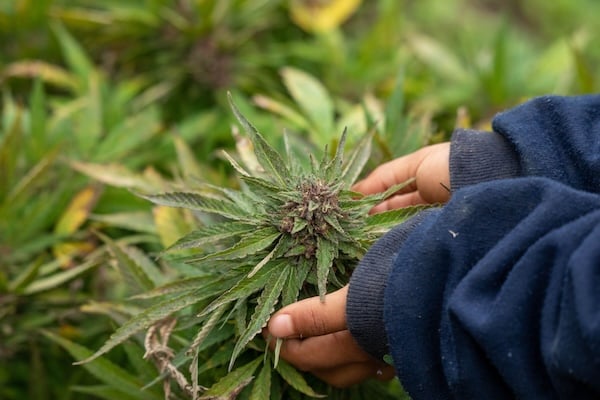
Image credit: Belier Baracaldo
When to Super Crop Cannabis
The best time to super crop is usually during the mid-to-late vegetative stage. At this point, your plants should have approximately five to six established nodes and healthy, green, flexible stems. Look for stems that give slightly under controlled pressure while avoiding woody or rigid branches that are more likely to snap.
Super cropping during flower is possible, but growers usually reserve this approach for the first 1-2 weeks when the plant is still stretching, and only when necessary. Later on in the flowering stage, a harsh bend can slow growth. The plant tissue will have significantly less time to recover, and wounding it could interfere with its ability to support developing buds.
After super cropping, it’s typically good to wait 3-7 days before adding more stress; this gives the branch time to firm up and begin turning back toward the light.
That said, growing guides tend to vary slightly on the ideal starting point. Some recommend that new growers wait until 3-7 days before the flowering phase to super crop their plants, but note that experienced cultivators can make a second bend during the first two weeks of the bloom phase.
Others recommend an earlier window and advise growers to begin super cropping during the second or third week of the vegetative stage, while allowing 4-5 days of recovery time before flowering. While advice varies, it does tend to stick to the same practical rule: use super cropping primarily during vegetative growth. Bending the stems in the early flowering stage is generally considered an exception so long as the plant is still stretching, but this timing shouldn’t be used by default.
Super Cropping Autoflower Plants: What to Consider
Super cropping is an option for autoflowering strains, but it’s important to be especially cautious. Autos flower based on an internal clock and tend to have a shorter life cycle overall; this provides them with less time to recover from mistakes or prolonged stress.
Super crop an auto only if you are comfortable judging stem flexibility, and only early in veg with a light touch. For most newer autoflower growers, low-stress training is the safer option.
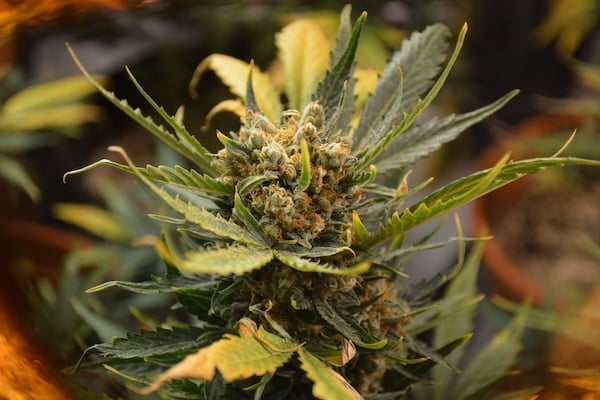
Image source: Francis Costelloe
Super Cropping Cannabis Step by Step
Step 1: Choose the bend point
Select a healthy, flexible green stem and find the point where you want the canopy to change direction. Make the bend just above a node, rather than directly on one. Avoid stems that have become woody or rigid. These are more likely to snap, rather than fold.
Step 2: Soften the stem
Hold the chosen spot between your thumb and forefinger. Gently pinch and roll it for about 10–20 seconds, using enough pressure to soften the inner tissue without splitting the outer skin.
Step 3: Make the bend
Slowly bend the stem in the direction you want it to grow, working toward roughly a 90-degree angle. The stem should fold over at the softened point—not break apart. You may feel a muted give, or even hear a faint crunch, as the inner tissue yields. A sharp crack, visible split, or dangling branch means you have gone too far.
Step 4: Support and monitor
If your plants need it, you can support their branches with soft plant ties or loosely anchored zip ties. Check the stems daily as they recover and keep an eye out for knuckle formation. For the first session, it may help to stick to 2-3 branches on the side of the plant. Give them time to recover before treating additional branches.
Ideally, the stem should soften and bend as the inner pith gives way with a soft crunch. However, a sharp crack or sudden collapse means the stem has broken.
Fixing a Snapped Stem
A split stem does not always mean losing the branch. If the outer skin has torn but the branch is still attached, gently move it back into its original position so the damaged surfaces meet. Place a small bamboo stake, plant stake, or clean wooden skewer alongside the break, then wrap the area with flexible grafting tape or plant bandage tape. Duct tape can work in a pinch, but apply it snugly—not tightly.
Keep the repair supported and undisturbed for at least one to two weeks. Check it daily to make sure the wrap has not shifted or begun to constrict the stem. Some repairs need longer before the branch can support itself again, particularly if the split was deep. If you need extra support, use a soft plant tie; reserve zip ties for anchoring the stake to the pot or another support, not for tightening around the injured stem.
If a branch is fully severed, make a clean cut with sanitized scissors rather than trying to force it back together. The same is usually true of a major break late in flower, when there is little time for the branch to recover before it must support developing buds.
To prevent future breaks, soften the stem thoroughly before bending. Work with plants that look healthy and hydrated—not droopy, and not immediately after a heavy watering.
Super Cropping vs. Topping, Fimming, LST, and ScrOG
Cannabis training techniques typically work toward a similar goal—a flatter, more even canopy. However, they reach this goal in different ways. Below, we cover the differences between super cropping and other training techniques.
Topping vs. Super Cropping
Topping cannabis permanently removes the main growing tip (the apical meristem), prompting the plant to develop two new main shoots. It is best used during the early vegetative stage, giving the plant ample time to recover. Super-cropping differs because it keeps the growing tip intact—instead of cutting, you gently soften and bend a branch to lower its position in the canopy.
Fimming
Fimming involves removing roughly 75% of the apical meristem—the newest growth at the very tip of the plant. By partially trimming this center shoot rather than severing it completely, the plant can produce four or more new leading shoots, though the growth pattern is typically less uniform than topping.
Low-stress training (LST)
Ideal for growers of all experience levels, LST relies on gentle bending and soft ties to reshape the canopy without damaging plant tissue. LST weed generally faces minimal risk and is shaped through gradual adjustments. As such, newer growers are encouraged to practice this approach; it can be an excellent foundation for attempting higher-stress techniques.
ScrOG
A ScrOG setup uses a horizontal mesh screen to coax branches outward into a uniform, well-lit plane. When a branch becomes too tall or rigid to comfortably tuck under the net, super-cropping can be an excellent complementary technique, as it softens the stem and allows it to comfortably fit under the net.
Training Techniques: An Overview
| Technique | Stress level | Typical recovery | Best stage | Skill level |
| Topping | High | Several days to ~2 weeks | Early to mid veg | Beginner to intermediate |
| Fimming | Moderate | Several days to ~1 week | Early to mid veg | Beginner to intermediate |
| Super cropping | High | Several days to ~1 week | Mid to late veg; early flower when needed | Intermediate to advanced |
| LST | Low | Little to none | Veg through early flower | Beginner |
| ScrOG | Low | Little to none | Veg through early flower | Intermediate |
One important thing to remember is that recovery times will vary with every grow. While the above windows can serve as practical estimates, they’re not guarantees.
Plant health, cultivar, environment, and the amount of training already performed can all affect how quickly a plant resumes vigorous growth. The above table reflects the general timing and stress distinctions outlined in published grower guides.
A Final Note
Super cropping is a fairly straightforward way to train your plants, and more forgiving than it may seem. If you’re new to this process, we recommend starting with one healthy branch, waiting for it to recover, and using what you learn to help guide the next bend. Beginners may also find some of our other guides helpful to use alongside super cropping. These cover broader topics like how to grow cannabis and more specific ones, like watering cannabis.
Growers with some past experience may also want to compare super cropping with other training techniques such as topping or ScrOG. Once you feel ready to put these techniques into practice, we invite you to explore our library of high-quality seeds.
FAQs
Does super cropping increase yields?
It can if used correctly. Super cropping creates a more even canopy, and as a result, allows more bud sites to receive strong, consistent light. While controlled research specifically measuring yield gains from super cropping is limited, there’s a wealth of anecdotal evidence from growers that draws a clear line between super cropping and increased yields. This said, your results will always depend upon timing, plant health, light intensity, and other growing conditions.
How long does it take a plant to recover from super cropping?
A healthy plant typically needs about 3–7 days to recover from super cropping during vegetative growth. Recovery can take longer if your plants are especially stressed or if conditions are poor.
Can you super crop autoflowers?
Yes, but super cropping is riskier with autoflowers because their fixed life cycle leaves less time to recover from stress or mistakes. If used, the technique is best limited to healthy plants early in development, around weeks 3–4, and applied lightly to flexible branches. For growers who want to minimize recovery time, low-stress training (LST) is generally the safer option because it shapes the canopy without deliberately damaging the stems.
Does super cropping require tools?
No tools are required for super cropping itself. The technique involves gently pinching and crushing a section of the stem before bending it into position. Plant ties or stakes can be useful for supporting branches afterward, while grafting tape or duct tape can help repair a stem if it splits too far. The goal is to bend the plant in a controlled way, not make a clean break. For this reason, supports are best viewed as an optional backup rather than something you’ll definitely require.
References
Serraf, A., & Bernstein, N. (2026). Pre-harvest mechanical stress increases cannabinoid and terpene production in cannabis. BMC Plant Biology. Advance online publication. https://doi.org/10.1186/s12870-026-09309-9